

United announced on October 13, 2026 that it is fundamentally changing how you earn MileagePlus Premier status. Starting with 2027 qualifying activity, there is only one metric that matters: Premier Qualifying Points. The segment path is dead, and the top tier just got a lot more expensive.
If you fly United, this is the most important loyalty announcement of the year. Here is everything that changed, who wins, who loses, and the two deadlines that matter before the end of 2026.
Click here for the best cards with the highest welcome offers.
TL;DR
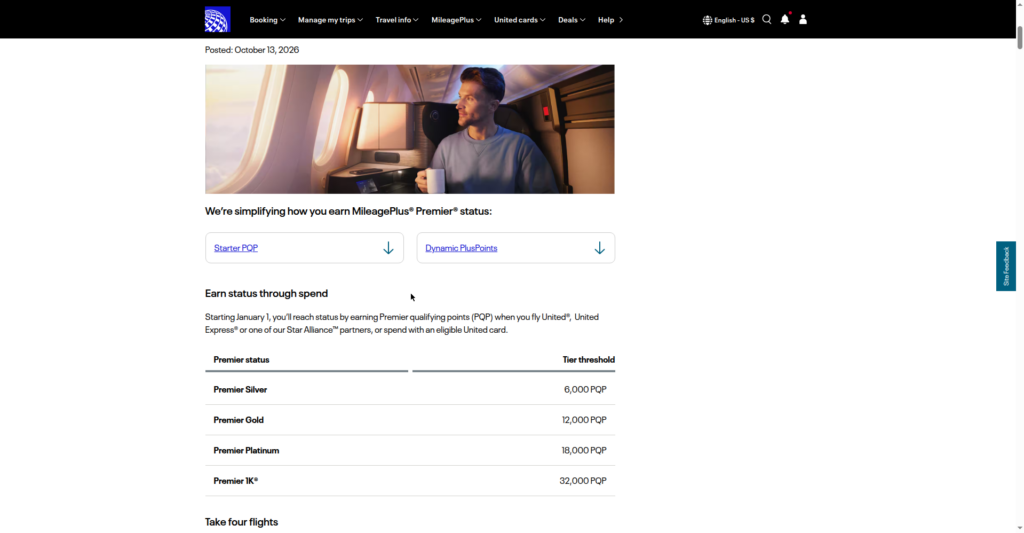
For 2027 qualifying activity (status for 2028), United is eliminating Premier Qualifying Flights (PQFs) entirely. Status will be earned on Premier Qualifying Points (PQPs) alone: 6,000 for Silver, 12,000 for Gold, 18,000 for Platinum, and 32,000 for 1K. Silver, Gold, and Platinum thresholds match today’s PQP-only path, so nothing changes if you already qualified that way. The 1K bar rises from 28,000 to 32,000 PQP, a 14% increase on the points path and a 45% increase for anyone who was qualifying with 60 segments plus 22,000 PQP. You still need at least four United or United Express flights per year. Separately, PlusPoints upgrades go dynamic for travel from February 2027. Qualifying activity in 2026 still follows the old rules.
| Tier | 2026: PQF + PQP | 2026: PQP only | 2027: PQP only |
|---|---|---|---|
| Silver | 15 flights + 5,000 | 6,000 | 6,000 |
| Gold | 30 flights + 10,000 | 12,000 | 12,000 |
| Platinum | 45 flights + 15,000 | 18,000 | 18,000 |
| 1K | 60 flights + 22,000 | 28,000 | 32,000 |
PQP = Premier Qualifying Points. 2026 columns are the current paths; 2027 is PQP-only. Four United/United Express flights still required every year.
What exactly changed
Until now, United gave you two ways to earn status. You could qualify on points alone, or you could fly a set number of segments and qualify at a lower points threshold. That second path is what made United the airline of the road warrior: fly 60 cheap segments, spend $22,000, and you were a 1K.
As of January 1, 2027, the segment path is gone. One metric, PQP, decides everything. For Silver, Gold, and Platinum, the 2027 thresholds are identical to today’s PQP-only numbers, so if you were already qualifying on points alone, your target does not move. The only threshold that actually rises is 1K: 28,000 to 32,000 PQP.
Two things did not change. You still need at least four flights on United or United Express each year to earn any status, and partner flights do not count toward those four. And PQP still means what it meant: roughly one point per dollar of eligible airfare, counting base fare and carrier surcharges but not government taxes. PQP is not total trip spend.
Who wins and who loses
The winners are easy to spot. If you always qualified on PQP alone at Silver, Gold, or Platinum, nothing about your life changes. Your threshold is the same number it was. High spenders who never counted segments will not notice a thing.
The losers are the segment flyers. Anyone who earned status by flying a lot of cheap segments at a lower points total just lost their entire strategy. Forty-five short hops for Platinum meant something in 2026. In 2027, segments buy you nothing toward status beyond the four-flight minimum. The classic mileage run, repositioning flights, and end-of-year segment padding are all dead as status tools.
Then there is 1K, which loses no matter how you earned it. The PQP-only 1K goes from 28,000 to 32,000, a 14% increase. The segment-path 1K goes from 22,000 PQP plus 60 flights to a flat 32,000 PQP, which is 10,000 more points, about a 45% jump. That is the single biggest status devaluation in the US legacy programs this year.
The 1K math, worked out
Put the 1K increase in concrete terms. A flyer who earned 1K in 2026 with 60 segments and $22,000 in eligible spend needs $32,000 in eligible spend for the same tier in 2027. That is $10,000 more flying, or about $835 more per month, for identical benefits.
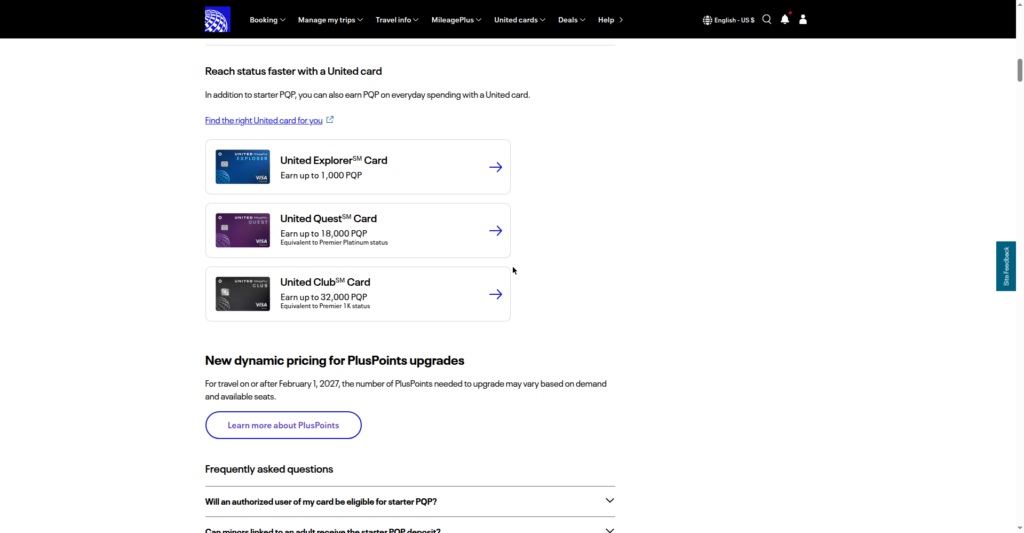
The credit card path exists but it is not realistic for most people. The United Club card earns 1 PQP per $15 in card spending, and United raised its annual PQP cap to 32,000 for 2027 to match the new 1K bar exactly. In theory, you could earn 1K entirely through the card and fly only the four required segments. In practice, that takes $480,000 in annual card spending. At that level of spend, you would earn far more value putting it on a card with better rewards and buying your upgrades outright.
The honest version: 1K is now a $32,000-spend tier, full stop. United wants its top published tier to mean top spending, the way Delta’s Diamond means $28,000 in MQDs and American’s Executive Platinum means 200,000 Loyalty Points. The difference is that United still makes you actually fly. American lets you earn top tier entirely on the ground through credit card spending, and Delta moved to MQDs-only back in 2024. United’s four-flight minimum is the last remnant of the old world where status meant time in the air.
PlusPoints go dynamic in February 2027
Buried in the same announcement is a second change that hits Platinum and 1K members where it hurts. Starting with travel on or after February 1, 2027, PlusPoints upgrades move to dynamic pricing. The fixed upgrade chart, the one that told you exactly how many PlusPoints an upgrade costs, is being retired.
United says prices will vary with demand, route, and cabin. In practice, that means peak-season and popular-route upgrades will cost more PlusPoints, and off-peak ones may cost less. United’s own framing is that it is market pricing, not a devaluation. Anyone who has watched award charts go dynamic knows how that story usually ends for the most desirable redemptions.
Two practical notes. First, the fixed chart still applies through January 2027 travel, so if you are sitting on PlusPoints, the next few months are the last window where you know the price upfront. Second, United says anyone who already exchanged PlusPoints for 2027 PQFs will get a refund, with notifications going out to affected members.
The December 31 deadline: starter PQP
United is softening the transition with starter PQP, a headstart deposit for 2027. If you qualify for 2027 Premier status and you hold an eligible United credit card, United deposits 5% of your tier’s PQP requirement at the start of the year:
| Tier | Starter PQP |
|---|---|
| Silver | 300 PQP |
| Gold | 600 PQP |
| Platinum | 900 PQP |
| 1K | 1,600 PQP |
5% of the 2027 PQP requirement, deposited for 2027. Card must be open by Dec 31, 2026.
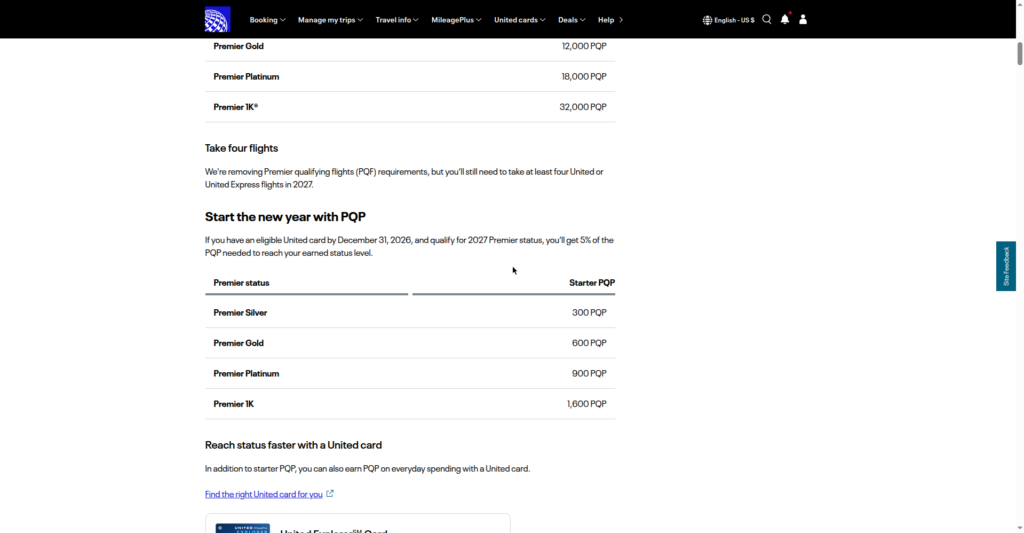
The catch is the deadline. You must hold the eligible card by December 31, 2026, and the deposit is based on your status as of February 1, 2027. No card by New Year’s Eve, no headstart. This is also separate from the annual PQP bonuses that Quest and Club cardholders get, which stack on top.
If you have been considering a United card, this deadline is the reason to decide now rather than in January. The starter PQP alone will not make or break a tier, but 1,600 free PQP toward a 32,000 target is 5% of the work done before you fly.
What to do now
If you are chasing status in 2026, nothing changes. Finish the year under the current rules, segments and all. The new system only governs 2027 activity.
If you fly United regularly, do the PQP math for 2027 now. Pull your 2026 numbers and ask whether you clear the PQP-only bar for your tier without segments doing the work. If segments were carrying you, you have three options: spend more on United fares, add a United card for the PQP earning and the starter deposit, or accept a lower tier.
If you want the starter PQP, open an eligible United card by December 31, 2026. That date is fixed and it is coming fast.
If you hold PlusPoints, consider using them for travel through January 2027 while the fixed chart still prices every upgrade. After February, you are guessing.
And if you are a 1K on the segment path, start planning for a $32,000 year. That is the new price of the top tier, and no amount of short hops changes it.
The honest caveats
This is a qualification change, not a benefits change. United did not announce cuts to Premier benefits themselves: upgrades, free checked bags, priority boarding, and the rest stay as they are. The announcement is about how you earn the tiers, not what the tiers give you.
The dynamic PlusPoints details are still thin. United has not explained how waitlists work under dynamic pricing, whether prices are set far in advance or float until departure, or what the new price bands look like. Expect those details closer to February 2027.
United can also move the goalposts again. These thresholds apply to 2027 activity. Nothing stops another adjustment for 2028, and the direction of travel across the industry is one way.
Frequently Asked Questions
Do these changes affect the status I am earning in 2026?+
No. Activity in calendar year 2026 still follows the current rules, including the PQF plus PQP path. The PQP-only system starts with activity on or after January 1, 2027, which earns status for 2028.
Do I still have to fly United to earn status?+
Yes. Every tier still requires at least four flights operated by United or United Express in the calendar year. Partner airline flights do not count toward those four. This is the one piece United kept while American and Delta let you earn top tier without flying.
What happens to the PQFs I earn?+
Nothing in 2026; they still count toward this year’s qualification under the current thresholds. From January 1, 2027, segments no longer count toward status at all, beyond the four-flight minimum.
Can I earn 1K just with credit card spending?+
Technically yes. The United Club card earns 1 PQP per $15 with a 32,000 annual cap starting in 2027, which exactly matches the 1K bar. Realistically it takes $480,000 in card spending, which makes it a non-starter for almost everyone.
Will my existing PlusPoints lose value?+
The fixed upgrade chart still applies to travel through January 2027, so PlusPoints used by then price exactly as they do today. For travel from February 2027, upgrade costs go dynamic and will vary with demand, so high-demand routes will likely cost more.
Bottom Line
United’s 2027 changes end the era of earning status by flying a lot of cheap segments. One metric, PQP, decides everything: 6,000 for Silver, 12,000 for Gold, 18,000 for Platinum, 32,000 for 1K. If you qualified on points alone below 1K, your target never moved. If segments did the work, or you are chasing 1K, the new math is harsher, and the December 31 credit card deadline is the one lever worth pulling before the year ends.
Status now means spending. That is the whole announcement, and it is worth reading twice.
View comments
+ Leave a comment