
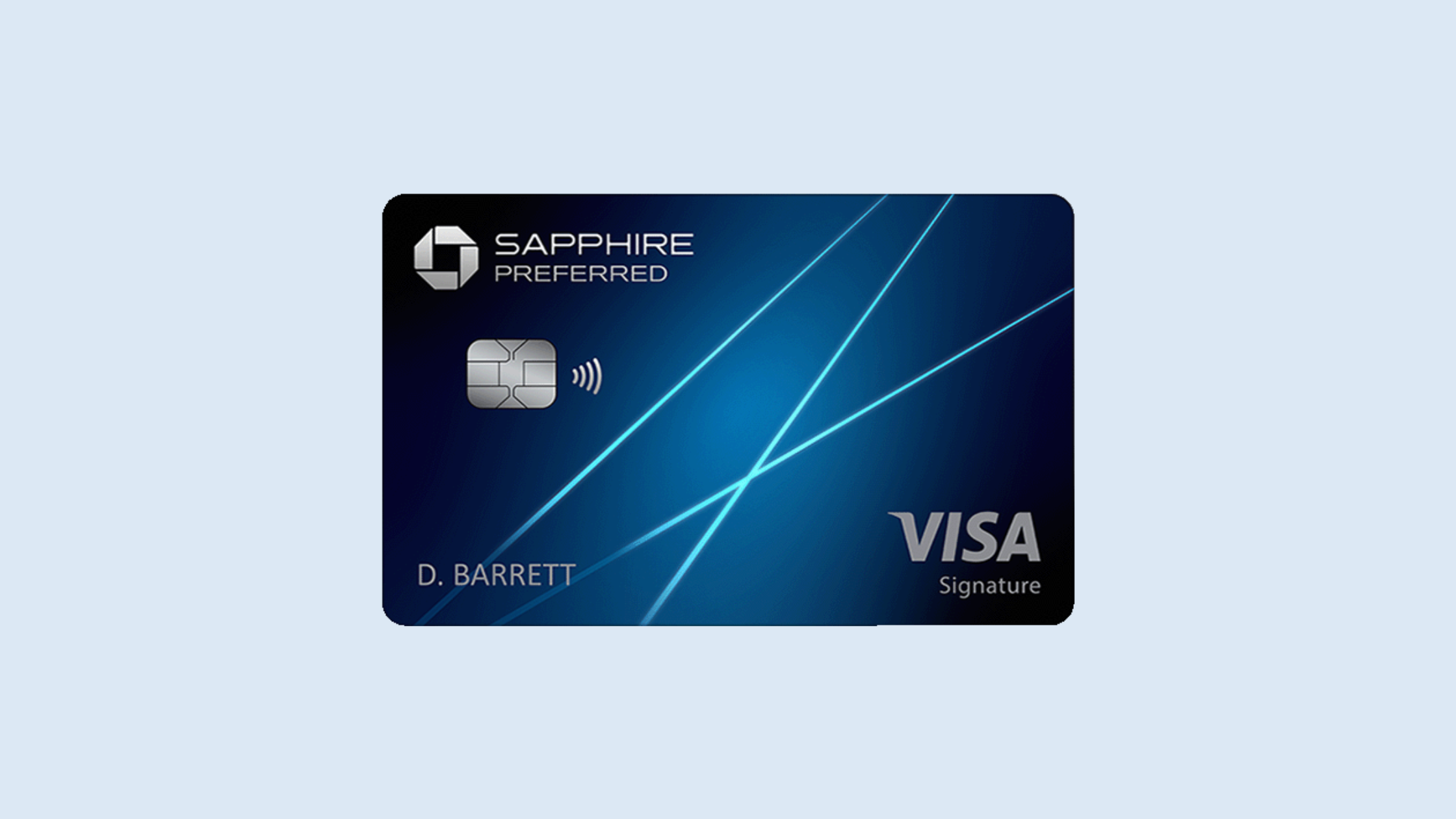
Almost every “best beginner travel card” list opens with this one, and almost none of them tell you why in a way that survives a follow-up question. So here’s the version I’d give a friend over coffee.
The Sapphire Preferred is not special because of its sign-up bonus, generous as the current one is. Bonuses come and go. It’s special because $95 a year is the cheapest key that unlocks Chase’s transfer partners — the mechanism that turns ordinary spending into business-class seats and family hotel stays you’d never pay cash for. Strip that away and you’re left with a decent rewards card carrying a fee. Keep it, and you have the most flexible points currency in the U.S. market.
That single distinction decides almost everything below. Let’s work through it.
First: does the $95 fee actually cost you anything?
I want to settle the money question before anything else, because it’s where most people get stuck — and where most guides oversell.
The card carries a flat $95 annual fee, not waived the first year. Against that sits a $100 statement credit each anniversary year for a hotel booked through Chase Travel. Book one hotel you were already going to stay at, run it through the Chase Travel portal, and the credit more than covers the fee. That’s not clever optimization; it’s a single transaction you’d make anyway. For anyone who travels even once a year, the fee is effectively neutralized on day one.
Two more credits sit on top:
- Up to $120 toward Global Entry, TSA PreCheck, or NEXUS, once every four years. Pay the application fee with the card and the statement credit posts automatically. Spread over four years that’s about $30 a year — modest, but it’s found money for something you’d buy regardless.
- A complimentary year of Apple TV (activate by Dec 31, 2026) and a DashPass membership, plus a small monthly DoorDash credit.
Here’s where I part ways with the inflated “this card gives you $600 in value!” math you’ll see elsewhere. Those totals only hold if you’d have paid full retail for every subscription on the list. Be honest with yourself: if you don’t already watch Apple TV or order delivery, those perks are worth zero to you, and counting them is how people talk themselves into a card that doesn’t fit. The credits that count are the ones replacing money you were already spending. By that honest standard, the hotel credit alone clears the fee, and the rest is upside if — and only if — you use it.
So the fee is rarely the real question. The real question is whether you’ll use the points well. That’s what the next two sections are about.
What it earns
The earning categories cover everyday spending more broadly than most people expect, which matters if you’re trying to build a points balance quickly rather than chasing a one-time bonus.
| Category | Points |
|---|---|
| Travel booked through Chase TravelFlights, hotels, cars, cruises, vacation homes, tours | 5x |
| Gas & EV chargingNew | 3x |
| Vacation homes booked directlyNewAirbnb, Vrbo & similar | 3x |
| Dining worldwideIncludes takeout and delivery | 3x |
| Online groceriesExcludes Walmart, Target & wholesale clubs | 3x |
| Select streaming services | 3x |
| All other travel booked directlyAirfare, hotels, trains, taxis | 2x |
| Lyft ridesThrough Sep 30, 2027 | 5x |
| Everything else | 1x |
Tip: a vacation home booked directly earns 3x, but the same property booked through Chase Travel earns 5x — worth a quick price check before you book.
One detail saves or costs you real points: a vacation home booked directly on Airbnb or Vrbo earns 3x, but the same property booked through Chase Travel earns 5x. Before you book a rental, it’s worth a thirty-second price check between the two. If Chase Travel matches the direct rate, you’ve just earned two extra points per dollar for nothing. If booking direct gets you a better price or a host you trust, take the 3x and move on — the gap isn’t worth overthinking on a small booking, but on a $3,000 family rental it’s 6,000 points.
Where the points actually go (and what they’re worth)
This is the part that separates a points card from a glorified cash-back card, so it’s worth slowing down. Your Chase points transfer, at no cost and with no blackout dates, to 14 airline and hotel programs:
| Type | Transfer Partner |
|---|---|
| Airlines | Aer Lingus |
| Air Canada Aeroplan | |
| Air France-KLM Flying Blue | |
| British Airways | |
| Iberia | |
| JetBlue | |
| Singapore Airlines KrisFlyer | |
| Southwest | |
| United | |
| Virgin Atlantic | |
| Hotels | IHG One Rewards |
| Marriott Bonvoy | |
| World of Hyatt | |
| Wyndham Rewards |
Transfer ratios and partners shift, and Chase runs periodic transfer bonuses. See what’s live right now before you move any points.
A point is worth wildly different amounts depending on what you do with it, and pretending otherwise is how people end up redeeming for a toaster. Cashing points out is the floor — a cent each, and you should treat that as the worst-case use, not a plan. Booking through the Chase Travel portal lands you somewhere modestly above that, occasionally more when a “Points Boost” offer is attached. But the entire reason to hold this card is the top end: transfer to the right partner for the right trip and a single point can be worth several times its cash-out value.
A concrete example, because abstractions don’t help you book anything. Four round-trip economy seats to Europe, or one lie-flat business seat, or a week of family nights at a Hyatt resort — these are the redemptions where points routinely return three to five cents apiece against the cash price. That’s the difference between “a few hundred dollars of cash back” and “a trip you wouldn’t otherwise have taken.” It’s also why I’d rather you carry this card and learn one or two transfer partners well than carry five cards and use none of them properly.
A note on Hyatt specifically, since it’s the program points people ask about most: World of Hyatt can be fed from almost nowhere except Chase and Bilt, which is what makes it valuable and scarce at the same time. As of the 2026 update, the transfer rate moved from 1:1 to 4:3 — 1,000 Chase points now becomes 750 Hyatt points. That’s a real haircut, and I won’t wave it away. But Hyatt’s award pricing is low enough that even after the cut, a resort night that sells for several hundred dollars can still come in at a fraction of that in points. The math got worse; it did not stop working.
Points don’t expire as long as your account stays open, so there’s no clock forcing you into a bad redemption.
The protections most people forget they’re paying for
When you charge travel to this card, a set of insurances switches on automatically. They’re invisible until something goes wrong, and then they’re the reason the card pays for itself in a single trip. As a parent who travels with young kids, I treat these as the quiet core of the card, not a footnote.
| Protection | Coverage |
|---|---|
| Primary rental car coverage | Up to the vehicle’s cash value |
| Trip cancellation / interruption | $10,000 per person · $20,000 per trip |
| Trip delay reimbursement | $500 per ticket, after a 12-hour delay |
| Baggage delay | $100/day for up to 5 days |
| Lost luggage | $3,000 per passenger |
| Emergency evacuation & transport | Up to $100,000 |
| Purchase protection | $500 per claim · $50,000 per account, 120 days |
| Extended warranty | Adds 1 year to eligible U.S. warranties of 3 years or less |
| Foreign transaction fees | None |
The rental car coverage deserves a real explanation, because “primary coverage” gets thrown around without anyone saying what it means. Most credit card rental insurance is secondary: it only pays after you’ve filed with your own auto policy, which means a claim, a deductible, and a potential premium increase. The Sapphire Preferred’s coverage is primary — it pays first, without your personal insurer ever being involved. In practice, you decline the rental counter’s collision waiver (the upsell that often costs more per day than the car), pay with the card, and you’re covered for theft and collision up to the vehicle’s value. On an overseas rental that one benefit can save more than the annual fee in an afternoon.
The trip delay and cancellation coverage is the one families underrate. A delayed connection that strands four people overnight is exactly the scenario the $500-per-ticket delay benefit and the cancellation insurance exist for — and you didn’t have to buy a separate policy to get it.
If you already hold the card: what changed in 2026
For returning readers and existing cardholders, the card was updated in June 2026 without a fee increase. The short version:
Added: 3x on gas and EV charging, 3x on directly-booked vacation homes (up from 2x), the $120 Global Entry/PreCheck/NEXUS credit, emergency evacuation coverage, and a year of Apple TV. The anniversary hotel credit doubled from $50 to $100.
Removed or reduced: The 10% anniversary points bonus is gone for anyone applying on or after June 15, 2026. If you applied before that date, you keep earning it on purchases through October 1, 2026, paid out by January 31, 2027. And the Hyatt transfer rate dropped to 4:3 — immediately for new applicants, and from October 1, 2026 for existing cardholders.
If you’ve carried the card for years, the net is positive unless the anniversary bonus was a meaningful chunk of your earning. The doubled hotel credit more than offsets its loss for most people.
So — should you get it?
Here’s the decision, stripped of sales language.
It’s the right card if you take at least a trip or two a year, you’re willing to learn how transfer partners work (even just one), and you want into the points game without committing to a premium annual fee. It’s the strongest first card I know of for exactly this reason: low cost of entry, the most flexible currency, and protections that genuinely matter when you travel with people who depend on you. If you rent cars, that primary coverage alone can justify it.
It’s the wrong card if you rarely travel, you have no intention of ever transferring points to a partner, and you’d genuinely prefer the set-it-and-forget-it simplicity of flat cash back. There’s no shame in that — and a no-fee cash-back card like the Chase Freedom Unlimited® will serve you better. Paying $95 for transfer access you’ll never use is the most common mistake I see, and I’d rather you keep the money.
The deciding factor isn’t your income or your credit score. It’s whether you’ll actually use the thing that makes this card worth carrying.
Preferred or Reserve?
The natural next question is whether to skip straight to the $795 Sapphire Reserve. Briefly: the Reserve earns its much larger fee through lounge access, a bigger annual travel credit, and higher earning on flights and hotels — and it only makes sense if you’ll use all three consistently. For most people, especially anyone still deciding whether points are their thing, the Preferred delivers the substance at a fraction of the cost. Worth knowing: outside of travel booked through Chase Travel, the Preferred actually earns more than the Reserve on everyday categories like dining and groceries, and Chase now lets you hold both. In my household I currently hold the Chase Sapphire Preferred and the Chase Sapphire Reserve for Business while my wife has the Chase Sapphire Reserve Personal Card.
That’s over $1600 in annual fees alone, but we are able to make it work through the travel credits and the ability to transfer points to Hyatt 1:1 extracting several thousands in value from this set up each year.
This is exactly how I earn well over a million points a year — by optimizing everyday credit card spend and welcome bonuses. Choosing the right transfer partners, finding award space, and stretching points the way I do for my own family’s trips: it’s all in the Points Travel Playbook.
Get the Points Travel Playbook → The complete system I use for my own family’s travelJust got approved? Your first 30 days
A short, ordered checklist so the card starts working immediately:
- Plan your bonus spend before you spend it. Line up the minimum-spend requirement against bills and purchases you already have coming. Never buy things you don’t need to hit a bonus — that erases the value you’re chasing.
- Turn on the perks that require activation. Apple TV and DashPass don’t enable themselves; you’ll find them under Benefits & Rewards in your Chase account or app.
- Book one hotel through Chase Travel this year to claim the $100 credit. Put it on the calendar now so it doesn’t expire unused.
- Pick one transfer partner and learn it. You don’t need all 14. Choose the one that flies where you actually go, and learn how its award chart works. Mastery of one beats a passing familiarity with all of them.
- Don’t transfer points speculatively. Only move points to a partner once you’ve found the specific award seat or hotel night you want. Points in Chase are flexible; points sitting in an airline program are stuck there.
Chase Sapphire Preferred FAQ
Possibly. Chase generally won't approve you for this card if you've opened five or more credit cards from any issuer in the past 24 months. If you're early in your card journey, the Sapphire Preferred is often best applied for before you've used up those slots — it's a card worth prioritizing.
Yes. Each of you can hold your own card, and Chase lets you pool points between members of the same household. For a family chasing a specific redemption, two welcome bonuses and combined everyday earning get you there roughly twice as fast.
No — not while your account is open and in good standing. That's part of why there's no pressure to redeem badly.
Not usually for mainstream hotels and flights; prices are generally competitive. The thing to watch is that booking through the portal earns 5x but can occasionally complicate changes or loyalty credit with the airline or hotel. For a straightforward stay you're using the $100 credit on, the portal is fine.
A cash-back card gives you a fixed cent-per-dollar, full stop. This card gives you points that can be worth far more than a cent each — but only if you transfer them to partners for high-value travel. If you'll never do that, a cash-back card is genuinely the better choice for you.
$95, and no, it's not waived. Between the current welcome offer and the $100 hotel credit, year one typically returns far more than the fee.
View comments
+ Leave a comment